Every request a browser makes carries an IP address, and that address says who owns it. Addresses belong either to internet providers that hand them to homes and phones, or to hosting companies that rent them to servers. A residential proxy routes your browser's traffic through an address of the first kind, and that address becomes part of what a site reads alongside the browser fingerprint.
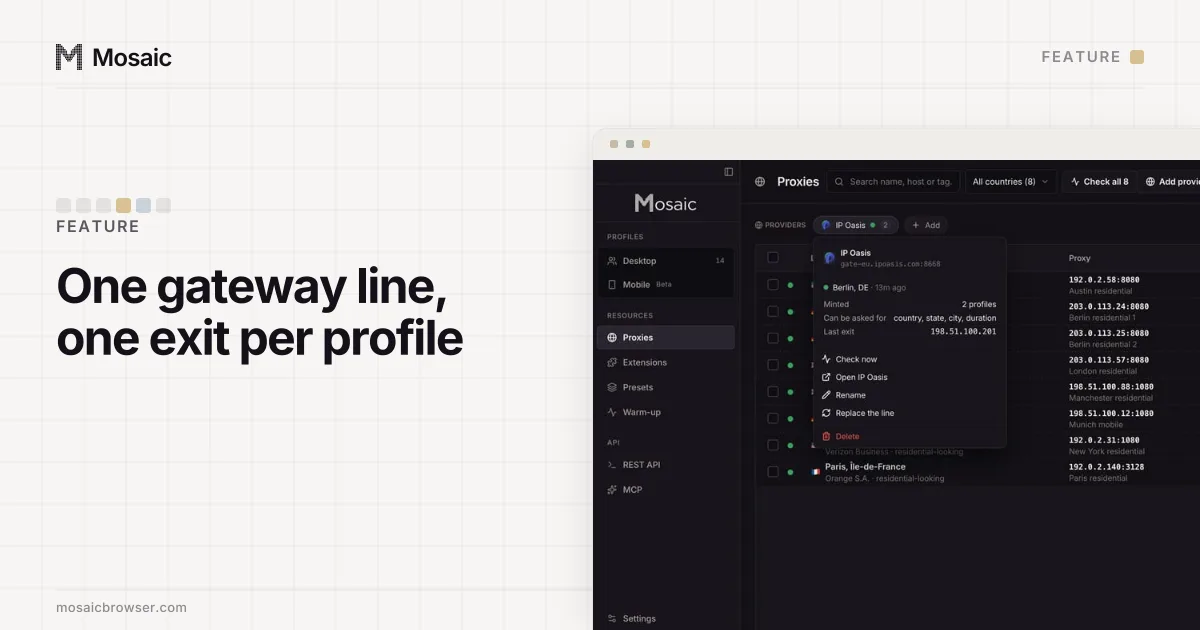
Paste one gateway line. Every profile mints its own exitIn Mosaic: Provider minting. One gateway line, a separate exit for every profile. Free holds 3 profiles. Pro is $49 a month for any number.
Mosaic is a desktop app
Email yourself the link and open it on your computer.
How it works: Provider minting
How it works
You connect to the proxy seller's gateway, a host and port, with a username and password. The seller forwards your traffic out through one address in a pool of residential connections. Options such as the country, sometimes the city, and a session id are usually written into the username. Each seller spells them differently.
A rotating setup gives you a different exit per connection or every few minutes. A sticky session keeps the same exit for a set time, which is what a logged-in account needs, since an account that changes address every few minutes looks odd.
Why it matters for accounts
A site looks at the exit address before anything else. A geo lookup tells it the address's country and whether the network is an ISP or a hosting company, and reverse DNS often names the hosting company outright. A shopper whose traffic arrives from a server rack is unusual; one arriving from a home broadband connection is not.
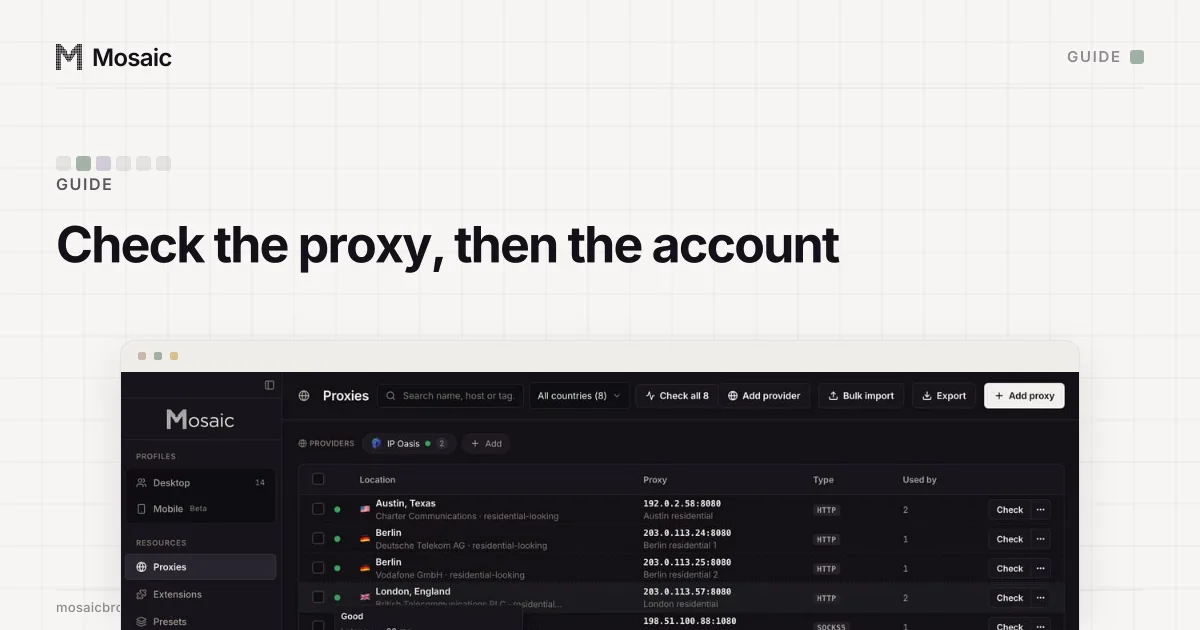
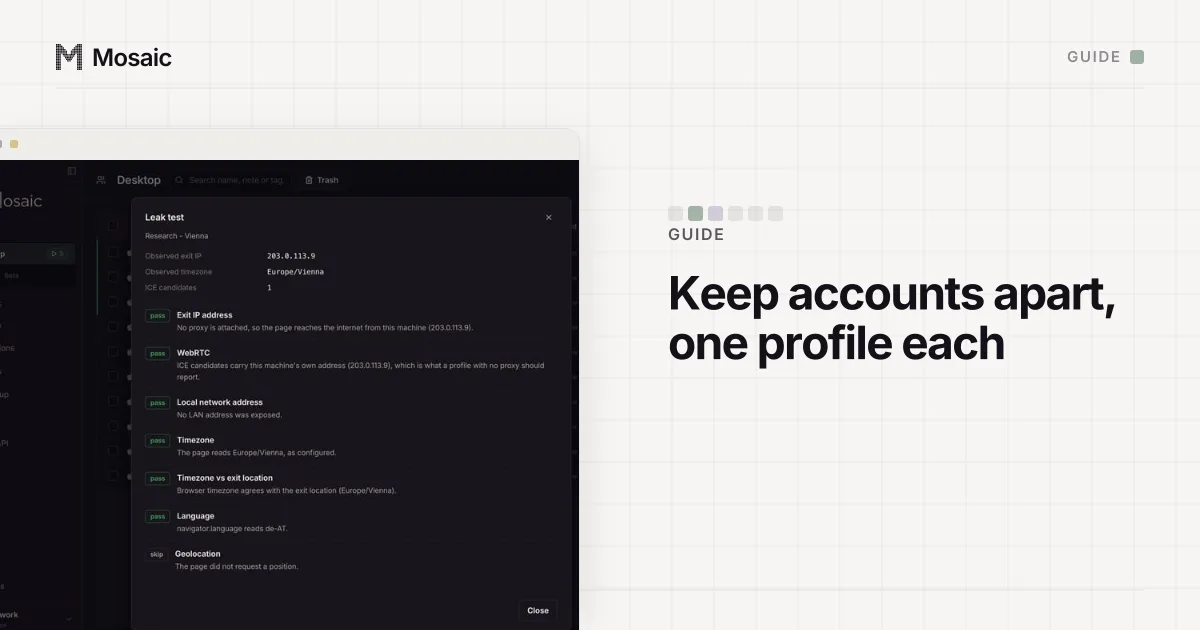
Residential exits also carry history. Addresses in a pool are reused, and one may already be on a spam blocklist. How to check a proxy before you use it covers blocklists, residential checks and leaks.
How Mosaic uses them
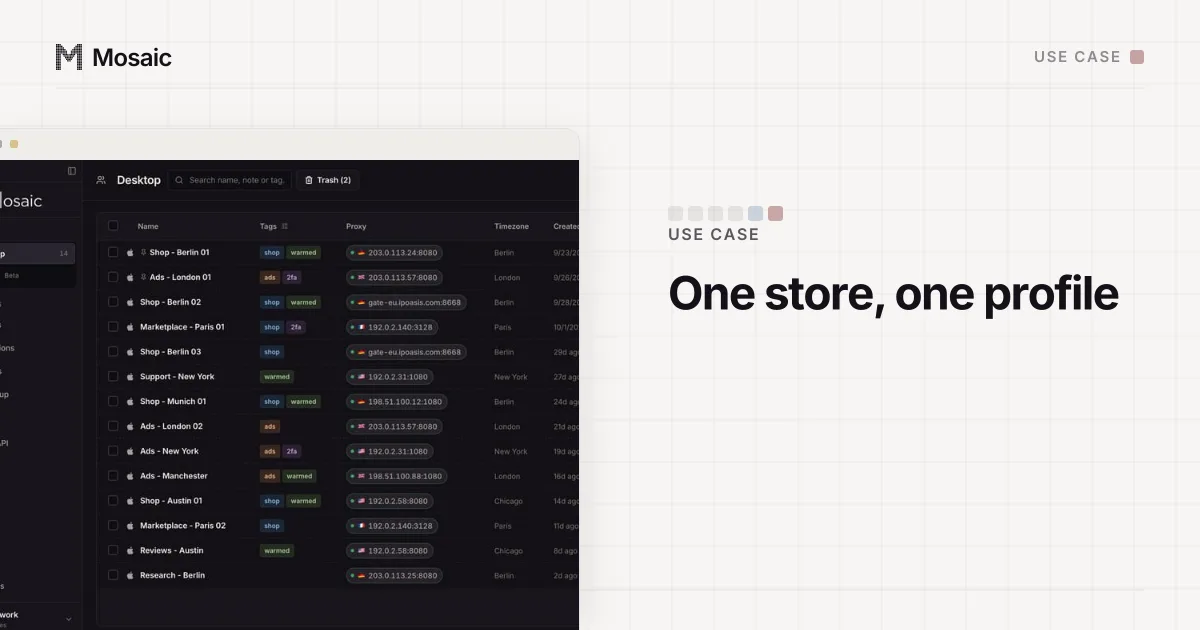
In Mosaic, a proxy seller's gateway line is saved once as a provider, and every profile mints its own sticky session from it, so each profile has its own exit. Mosaic checks the proxy before every launch, measures the exit's location, and sets the profile's timezone and language from it. A session that dies is replaced with a new one instead of being retried.