Facebook disabled your account because Meta decided the account, or something done on it, broke its rules. The email and the login screen rarely say which rule. Meta's help page gives three common examples: posting content that doesn't follow the Community Standards, misrepresenting your identity "to mislead or deceive others, evade enforcement or violate our Community Standards", and contacting people "for the purpose of harassment, advertising, promoting or other conduct that's not allowed" (My account is suspended or disabled, read 2 November 2026).
The most useful fact on that page is a date. You have 180 days to appeal.
Suspended or disabled: which one you have
Meta now uses two words, and they are steps in one process. When it first acts, it usually suspends the account. The login screen says "We suspended your account" and offers an appeal. If you don't appeal within 180 days, or the appeal fails, Meta "will permanently disable your account", and the screen says "We disabled your account".
Meta also says it may disable an account "without suspending it first, such as in cases of severe or time-sensitive violations". In that case there is no suspension stage to appeal from.
Either way, the account is invisible to everyone while it is suspended or disabled, and you can't use it. The help page adds that the 180-day period can vary by region, and that you "may have the right to challenge our decision in court, or refer our decision to a certified dispute settlement body".
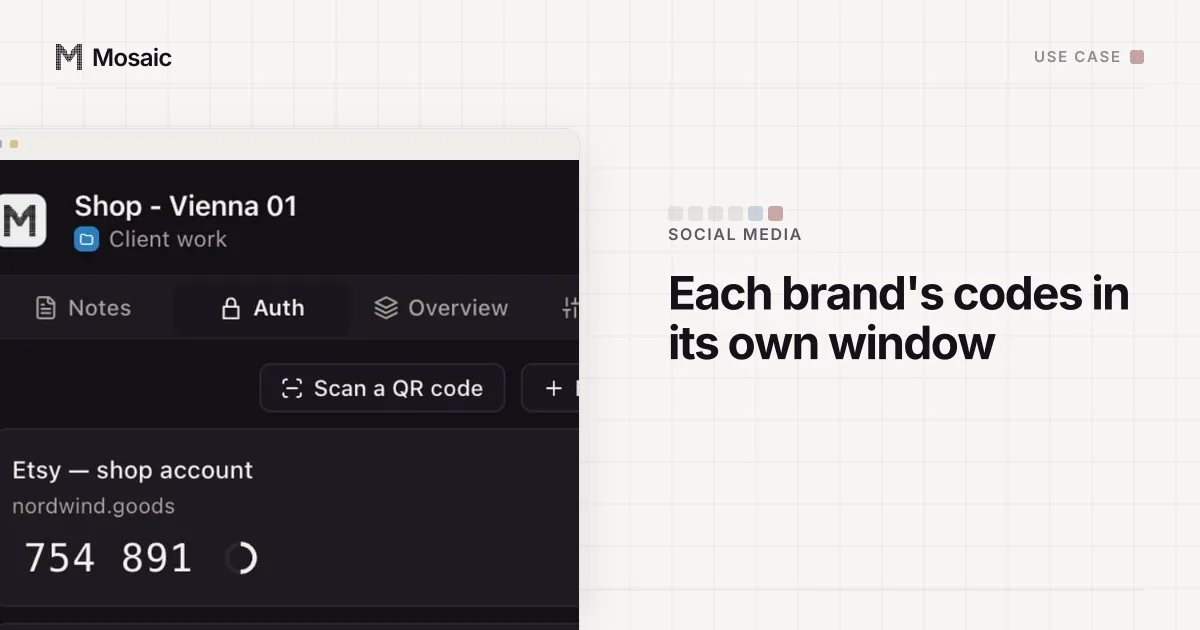
Each profile keeps its own passwords and its own 2FA codesIn Mosaic: Logins and 2FA codes. A password vault and TOTP codes for each profile. Free holds 3 profiles. Pro is $49 a month for any number.
Mosaic is a desktop app
Email yourself the link and open it on your computer.
How it works: Logins and 2FA codes
Why Facebook disables accounts: the reasons Meta gives
Meta's public policies are more specific than the email. Five patterns cover most cases.
Strikes that added up
Most disables are the end of a slow process. Meta's Transparency Center lays out the ladder: one strike is a warning, two to six restrict features such as posting in groups, and strikes seven, eight, nine and ten or more bring bans on creating content of 1, 3, 7 and 30 days (Restricting accounts, read 2 November 2026). Then: "if you continue to post content that goes against the Community Standards after repeated warnings and restrictions, we will disable your account." If you had warnings in the months before, this is the likely cause.
One severe violation
Some policies skip the ladder. The same page names dangerous individuals and organisations and adult sexual exploitation as policies where restrictions start on the first strike, and the help page says severe violations can disable an account outright.
An identity Meta doesn't believe
Facebook's terms ask for "the same name that you use in everyday life", accurate information about yourself, and one account per person (Facebook Terms, 3.1, read 2 November 2026). An account under a made-up name, one impersonating someone, or a second personal account can be disabled for that alone. So can the account of anyone under 13.
A connection to another removed account
Meta's Account Integrity policy says it may restrict or disable accounts "owned by the same person or entity as an account that has been disabled", accounts "created or repurposed to evade a previous account or entity removal", and accounts with "close linkage with a network of accounts or other entities that violate or evade our policies" (Account Integrity, read 2 November 2026). An account made after an earlier ban falls under this line. What Meta can read to make that connection is in how does Facebook link accounts.
Hacked, scripted or dormant
The same policy names three cases where Meta "may request additional information about an account to ascertain ownership": compromised accounts, accounts created or used "through automated means, such as scripting" outside authorised routes, and "empty accounts with prolonged dormancy". A hacked account that sent spam can be disabled for what the attacker did. If that is your case, start at facebook.com/hacked on a device you have logged in from before (Recover a hacked account, read 2 November 2026).
How to find out which one it was
If you can still log in, open Account Status: click your profile picture, choose Help & support, then Account Status (Account Status, read 2 November 2026). It shows the status of your main profile and of the Pages and groups you manage, and lists strikes, restrictions and limits. Also check the email Meta sent. It often names the policy even when the login screen doesn't.
How to appeal
- Log into Facebook with the disabled account. Meta prompts you to appeal while you are inside the 180 days.
- Follow the steps on screen. If Meta asks you to confirm your identity, its Confirm Your Identity section covers uploading an ID and video selfie verification.
- Say what happened, plainly. If it was a hack, say so and when. If it was a post, say which.
- Wait for the decision. Keep an eye on the email address on the account.
Do not open a new account while you wait. The terms say that after a disable for a violation, "you agree not to create another account without our permission", and the Account Integrity line above means the new one is likely to be disabled for its link to the old.
If you manage the account for work
Two of the reasons above are worth a second look if Facebook is part of your job. A hacked manager account takes every Page and ad account it can reach with it, so two-factor authentication on that profile is the cheapest protection there is. And if you automate anything that touches Facebook, Meta's policy counts scripting outside authorised routes as grounds for asking who owns the account. That applies to scripts run through any browser, ours included.
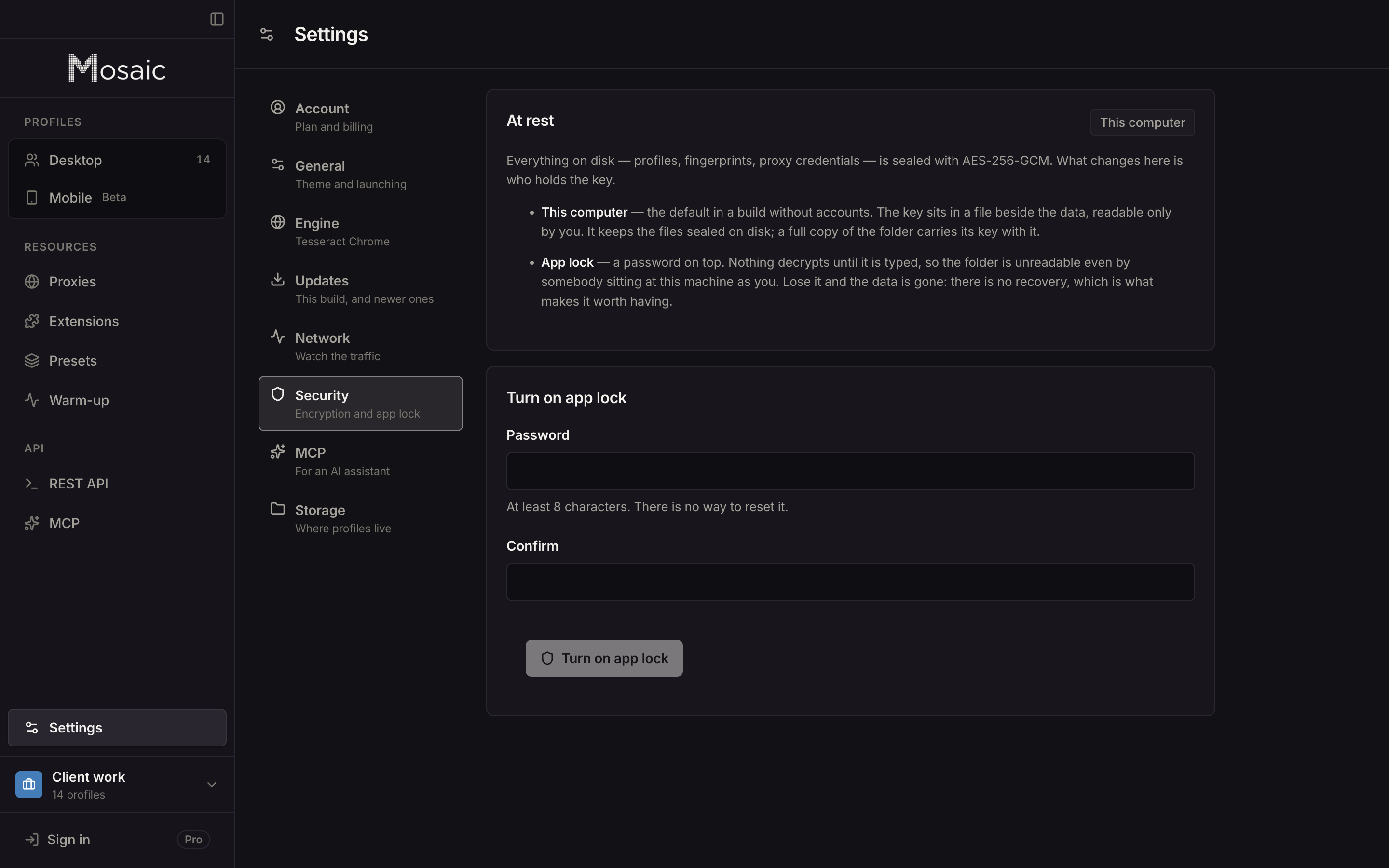
We make Mosaic, where each login sits in its own profile and the Credentials screen keeps its two-factor secret, so the code is to hand when Facebook asks for it.
If the account that was disabled ran ads, the ad side has its own review in Business Support Home, covered in Facebook ad account disabled: how to appeal. Why one person may only hold one personal account, and what to use instead, is in can you have two Facebook accounts. The set-up for people who run client accounts for a living is in Mosaic for social media managers.
Sources
- Facebook Help Center: My personal Facebook account is suspended or disabled, read November 2, 2026
- Meta Transparency Center: Restricting accounts, read November 2, 2026
- Meta Transparency Center: Account Integrity, read November 2, 2026
- Facebook Help Center: Check your Account Status on Facebook, read November 2, 2026
- Facebook Help Center: Recover a hacked account, read November 2, 2026
- Facebook Help Center: Confirm Your Identity, read November 2, 2026
- Facebook Terms of Service, 3.1 Who can use Facebook, read November 2, 2026