Facebook's real name policy asks for one personal account per person, under the name you use in everyday life, and for that account to be used by you alone. The legal name is not the test; the name you actually go by is. Running a business, a brand or a second public presence is allowed, through Pages and business portfolios, which hang off your one real account.
Facebook's terms allow one personal account per person. Mosaic keeps accounts you are entitled to run apart; it does not change what a platform allows.
What the rule asks, part by part
The rule is usually summed up as "use your real name", and that summary loses most of it. Read as a set, Facebook's terms and its standards on account integrity ask for four separate things.
- The name you go by. Not necessarily your legal name. A nickname, a shortened name or the name your friends call you is fine if it is genuinely what people know you as.
- Accurate information about yourself: not an invented person, and not someone else.
- One personal account. It is yours. A second personal account for yourself, for a pet project or for work is outside the rule.
- Use by you alone. You do not share the password, let someone else run the account, or sell or hand it over.
The fourth is the one people forget. A personal profile that a whole team signs in to is outside the rule even if the name on it is perfectly real, because the account no longer stands for one person.
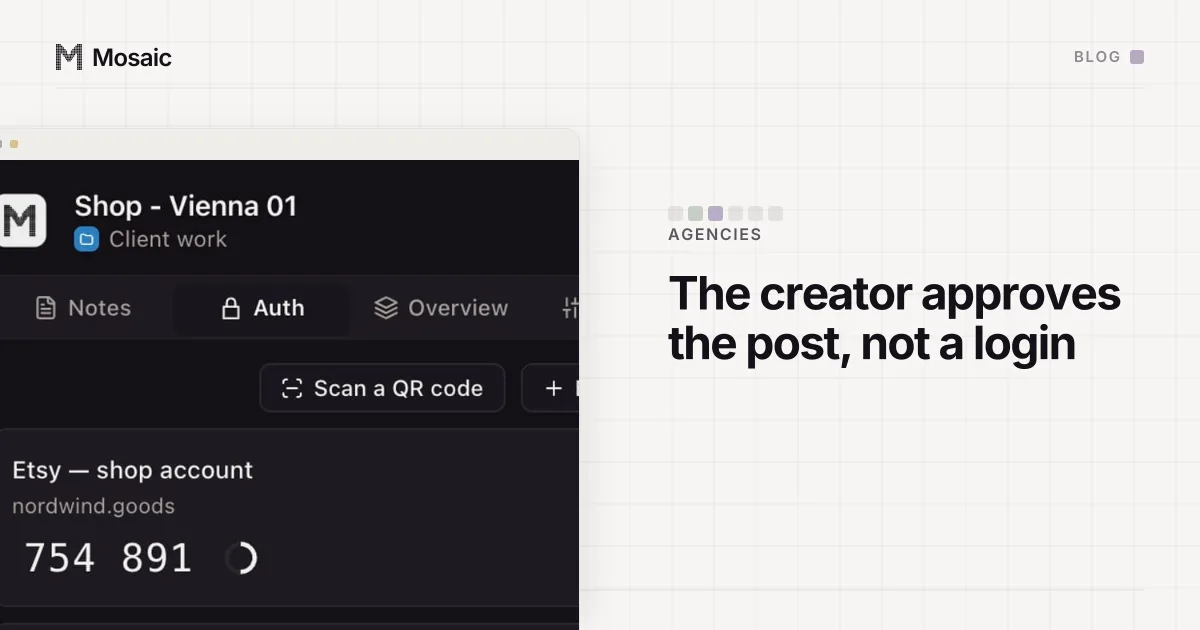
Each profile keeps its own passwords and its own 2FA codesIn Mosaic: Logins and 2FA codes. A password vault and TOTP codes for each profile. Free holds 3 profiles. Pro is $49 a month for any number.
Mosaic is a desktop app
Email yourself the link and open it on your computer.
How it works: Logins and 2FA codes
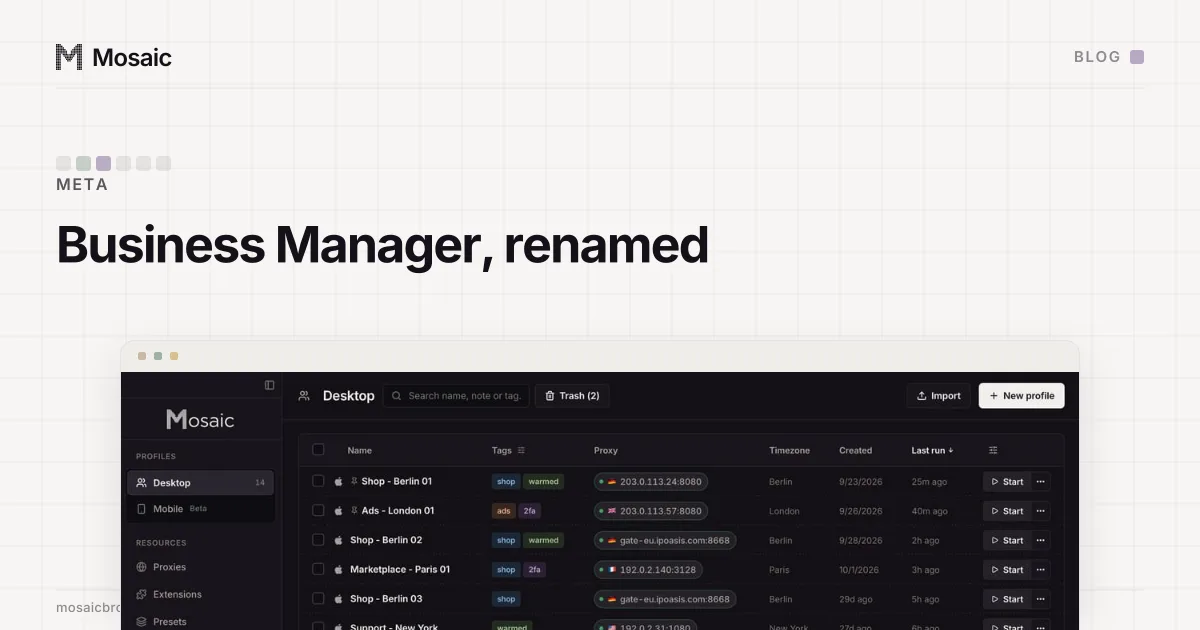
How the real name policy became authentic identity
The policy has not always been read so loosely about names. In 2014 Facebook suspended the profiles of drag performers who used their stage names, and over the following months transgender and Native American users reported being locked out for names that were theirs but did not look like it to a reviewer. The criticism was loud enough that Facebook said the rule was about the name you use in everyday life rather than a legal name, and it came to describe the rule as authentic identity. In late 2015 it also changed how reports work: a person reporting a name has to give more context, and someone whose name is challenged gets a chance to explain before the account is suspended.
What did not change is the core of it. A personal account is a person, under the name they are known by. When Facebook doubts a name, it can ask the owner to confirm it, sometimes with an identity document, and the account stays locked until they do.
What the rule does not forbid
The rule is narrower than it sounds, because Facebook built the other presences people need around it.
A Page is for a business, a brand, a band, a public figure or a cause. You create it from your personal account, it carries its own name, and other people can be given roles on it without anyone sharing a password. If what you want is a second public name, this is the sanctioned shape.
A business portfolio, the container Meta used to call Business Manager, holds Pages, ad accounts and Instagram accounts, and lists the people and partner businesses that can work on them. Each person in it signs in with their own personal account. Business Manager is now a business portfolio has what moved in the rename, which was nothing.
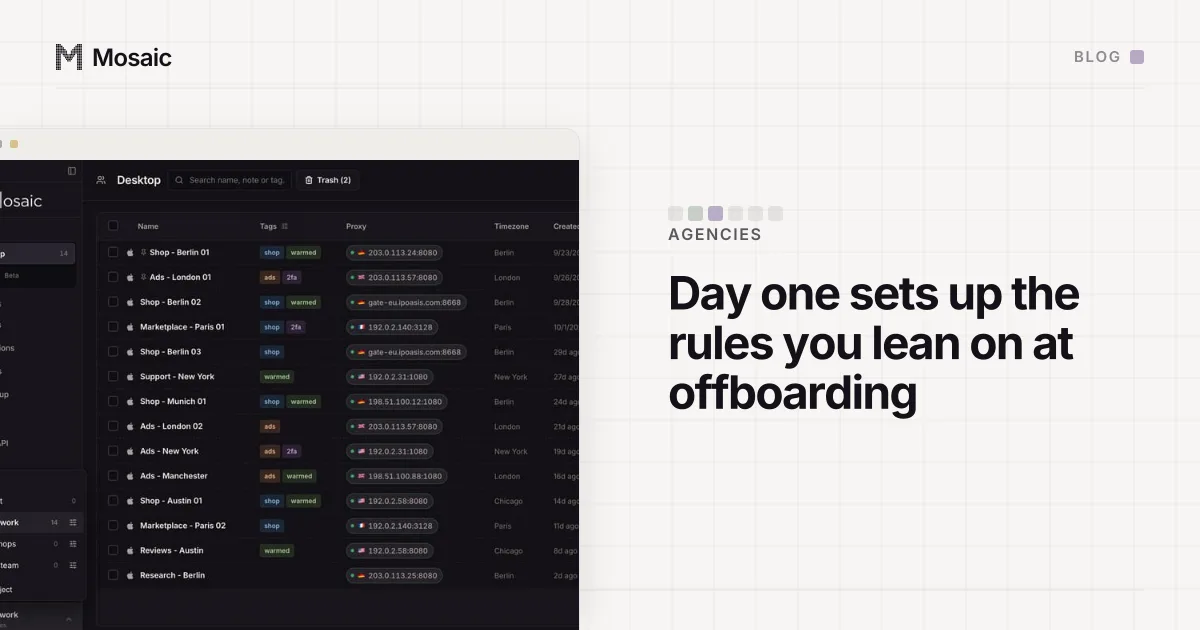
For an agency, that is the whole answer. The client adds your business as a partner and shares the assets. You and each colleague work from your own personal accounts. Nobody makes a second Facebook profile for client work, and ending the engagement is the client removing a partner. The first day of that setup, step by step, is in the first hour in the browser with a new client.
Where Accounts Center fits
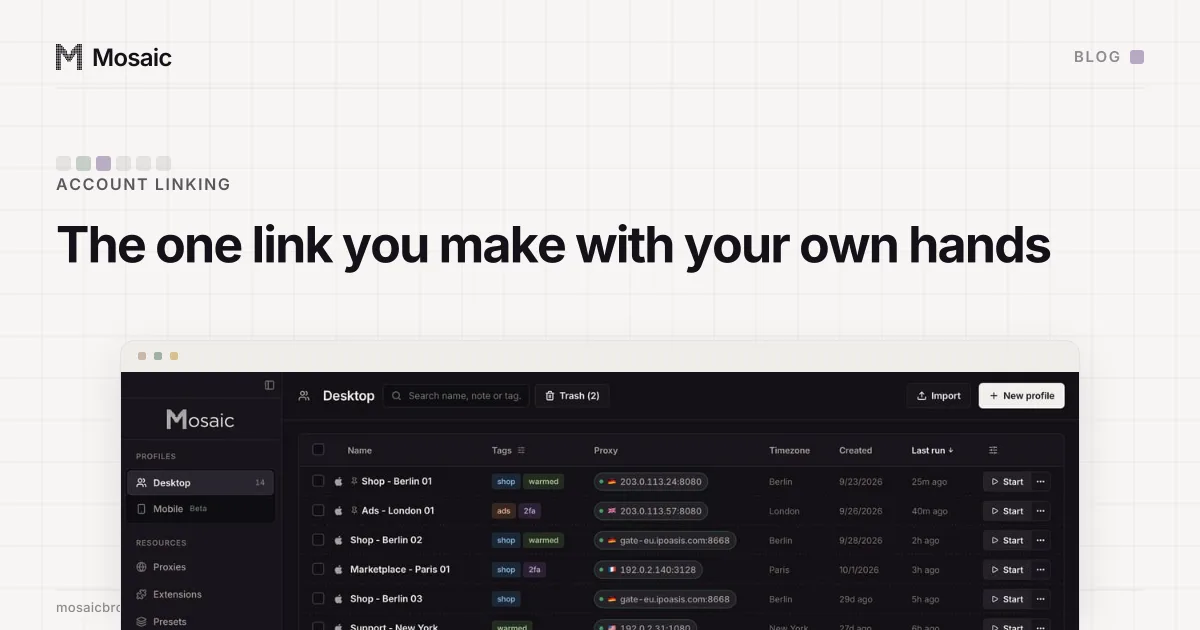
Meta's Accounts Center goes the other way: it asks you to link your Facebook, Instagram and Messenger accounts so that they share a login, contact details and ad settings. It is a statement, made by you, that those accounts are one person. That matters if you keep a personal Instagram and a work one, because linking both into one Accounts Center tells Meta they belong together. What Accounts Center does lists what is joined when you link.
Where a separate browser does and does not help
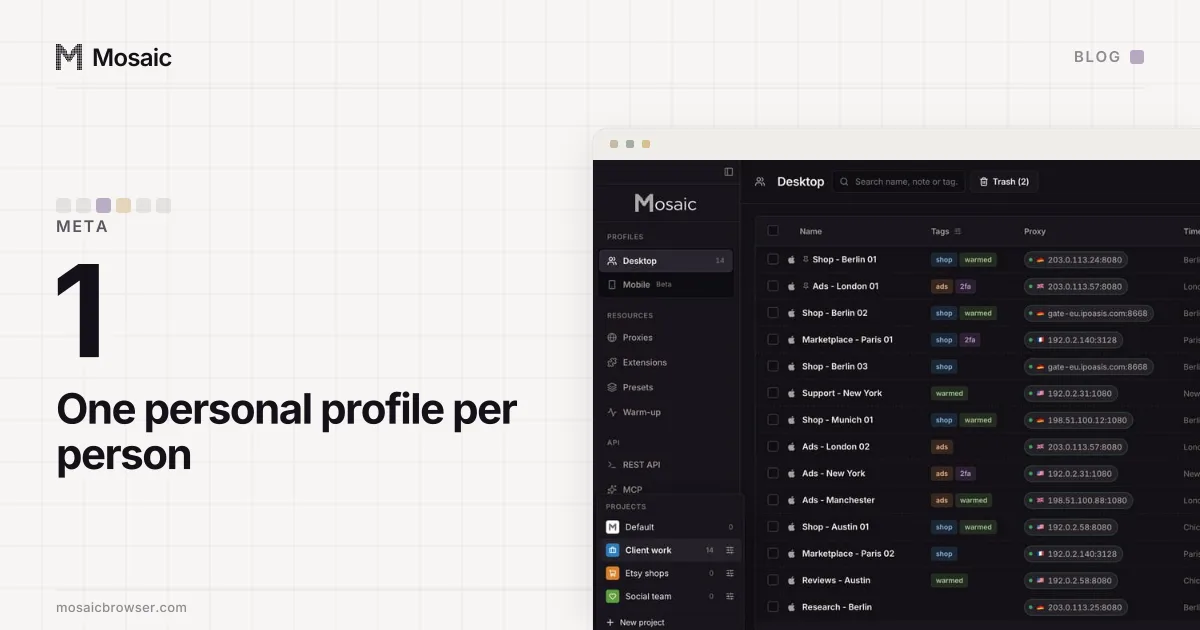
Signing in to your one Facebook account from more than one browser is not a second account. If you keep a Mosaic profile per client and sign in to your own Facebook in each, that is still one person with one account, reaching different clients' assets through their portfolios.
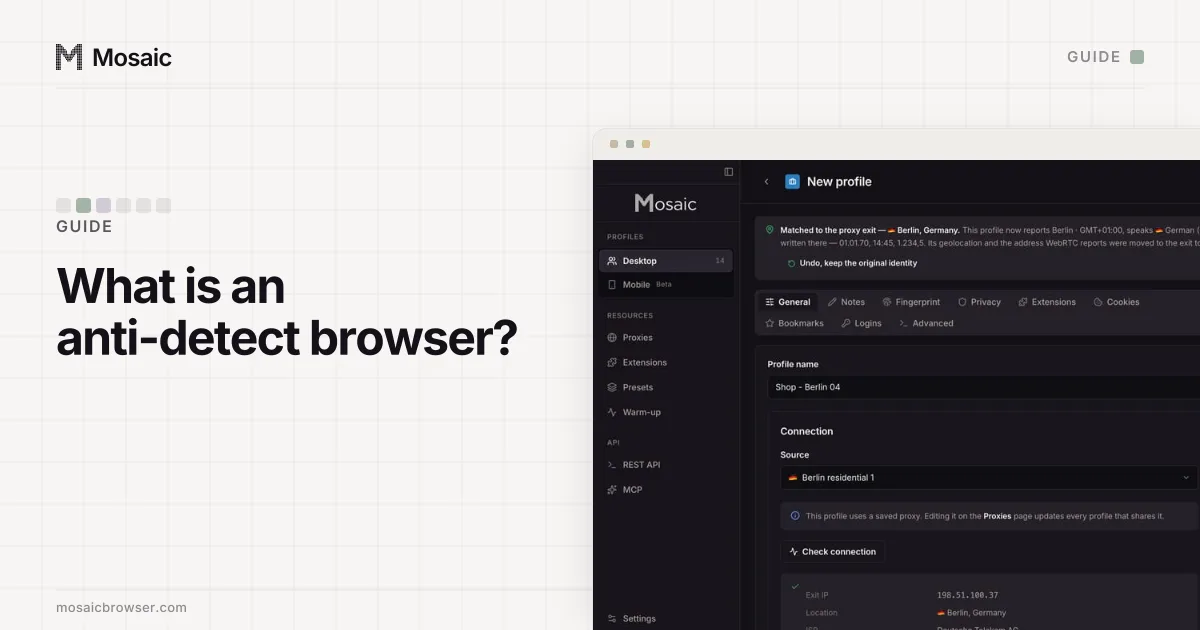
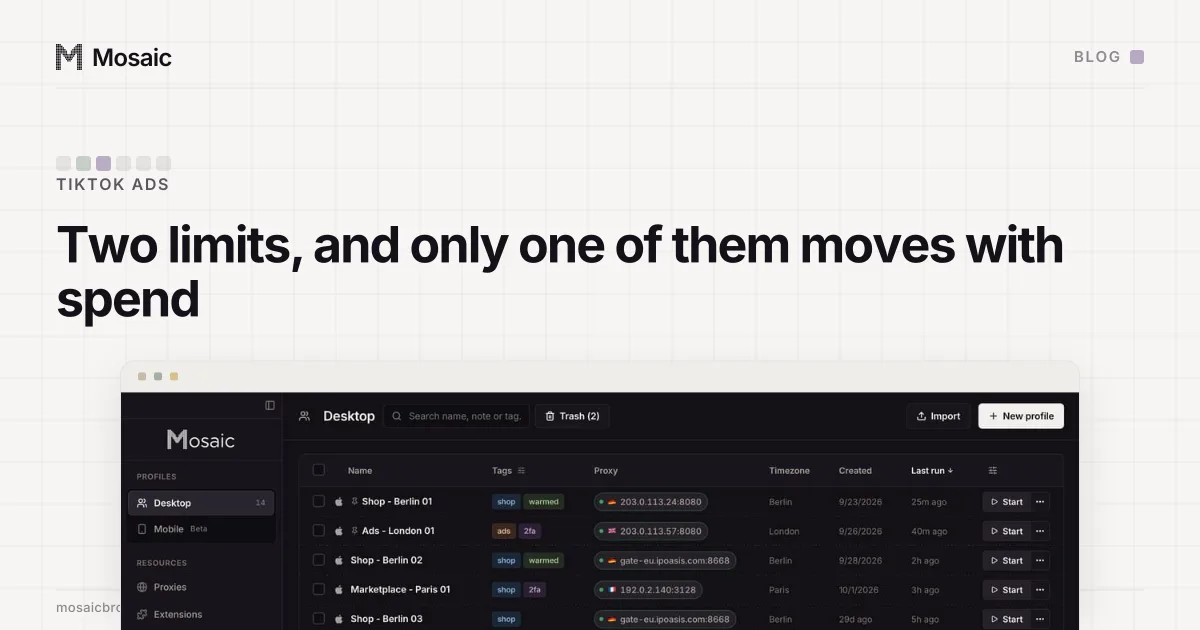
What a separate browser profile is for is everything around Facebook that has no partner role: a client's store admin, or another tool where the client has given you access of your own and its terms allow it. Each Mosaic profile keeps its own cookies, fingerprint and proxy, so one client's logins do not sit in the same browser as the next client's. What an anti-detect browser is explains what that separation covers and what it does not.
What a browser cannot do is turn one person into two. A second personal Facebook account is outside the terms whichever browser it is opened in, and we do not write guides for running one.