A YouTube MCN, or multi-channel network, is a company that links many YouTube channels to its own account inside YouTube's systems and sells them services: audience growth, programming, collaborations, rights management, monetisation and sponsorship sales. YouTube approves the networks, but they are third parties, not YouTube. Joining one gives the network a view of the channel's revenue and analytics, and no power over YouTube's own rules.
That makes an MCN the approved form of "one company, many channels". The link happens on YouTube's side, so nobody has to sign in to each channel with a borrowed password. It also comes with conditions that agencies tend to forget.
How a YouTube MCN works
YouTube's Help Center page for creators on MCNs describes two kinds of relationship.
An affiliate channel stays the creator's. It is linked to the network's content owner account, the network provides services under a contract, and the creator keeps uploading and running the channel. Most channels in most networks are affiliates.
An owned-and-operated channel is one where the network holds the rights to the content and runs the channel day to day, uploads included. That is a sale or a licence of the channel's work, not a service agreement, and it should be read as one.
In both cases the network works through YouTube's content management tools, the same system large rights holders use. That is what separates an MCN from a company that simply has many clients: the channels are linked to it in YouTube's records.
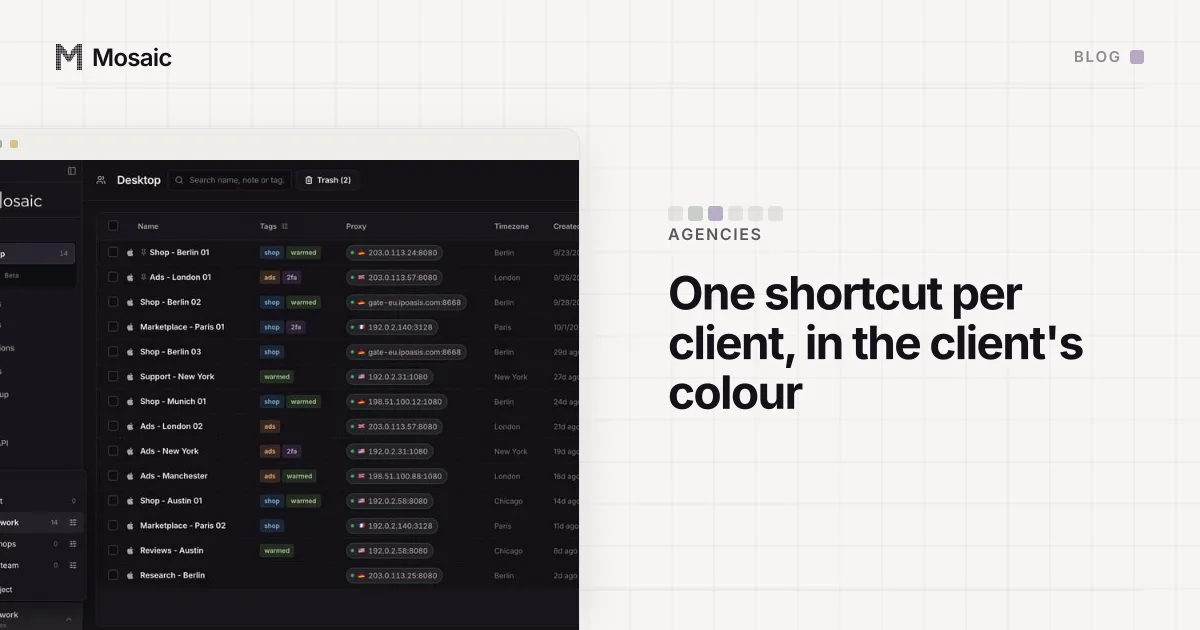
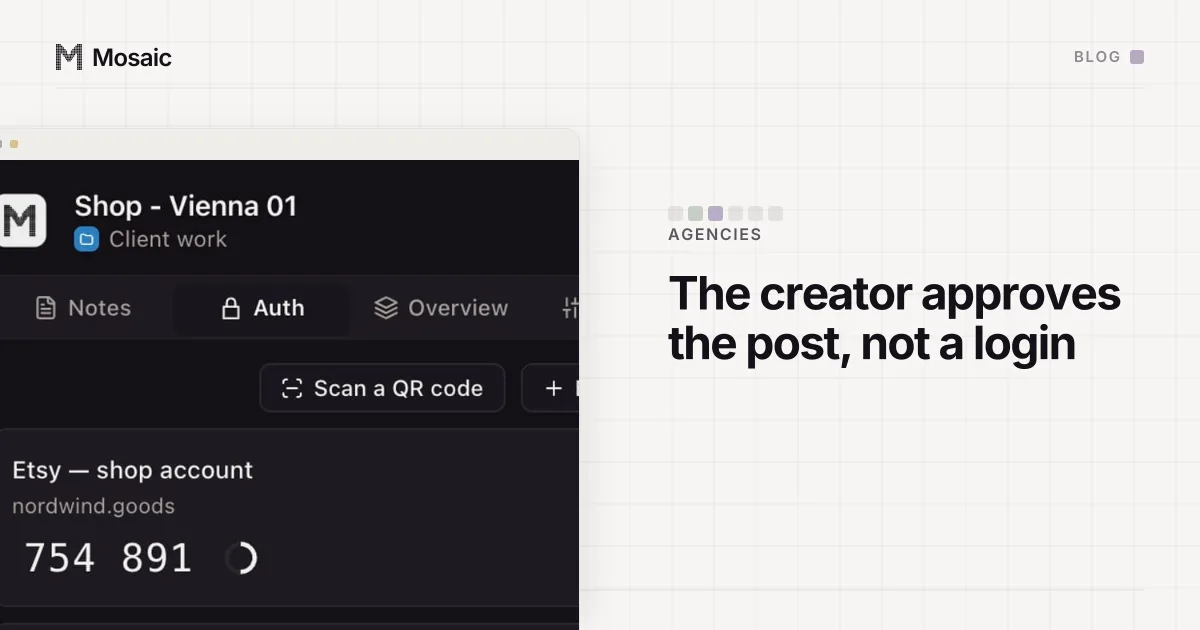
Each profile keeps its own passwords and its own 2FA codesIn Mosaic: Logins and 2FA codes. A password vault and TOTP codes for each profile. Free holds 3 profiles. Pro is $49 a month for any number.
Mosaic is a desktop app
Email yourself the link and open it on your computer.
How it works: Logins and 2FA codes
What an MCN can see and do
Once a channel is linked, the network can see its YouTube Analytics, revenue figures included. Revenue for an affiliate channel is paid to the network, and the network pays the creator its share under the contract, so the creator's own AdSense for YouTube account is no longer where that channel's money lands. For a creator who runs several channels, that changes the arithmetic in several YouTube channels and one AdSense account: a channel inside a network is paid by the network.
Through its content owner account, a network can also manage rights claims and monetisation settings on the videos it handles. The exact reach depends on what YouTube has approved that network for and what the contract allows. Read the contract for three things: the revenue share, what the network may do on the channel, and how you leave.
What an MCN cannot do
Some limits are YouTube's own, and no contract changes them:
- every channel in a network still has to qualify for the YouTube Partner Program on its own
- every channel has to follow YouTube's policies, network or no network
- strikes, suspensions and terminations are decided by YouTube, and only YouTube
So a network cannot monetise a channel YouTube would refuse, and it cannot bring back a terminated one. That second point matters more than it looks, because a termination covers the person behind the channel as well as the channel (what a terminated channel covers). An offer from anyone to restore one through "network access" is not a service YouTube provides.
The obligations an agency forgets
An agency that manages channels for clients is usually not an MCN at all. Becoming one means applying to YouTube, being approved and taking the channels into YouTube's systems under the network, with the revenue flowing through it. Most agencies want none of that. They want to edit, upload and reply to comments for the client, and leave the money and the ownership where they are.
YouTube Studio's channel permissions are built for that. The owner invites a person by email with a role, and can remove them later without anyone changing a password. Giving a virtual assistant access without the password covers the same idea for a single assistant.
The trouble starts when an agency acts like a network without being one: holding clients' Google passwords, receiving their payments, running their channels as if it owned them. None of that is approved anywhere, and when the contract ends, the agency has to hand all of it back. What to do with a client's profile when the contract ends is that handover, step by step.
Where a browser profile fits
When a client does give an agency its own Google sign-in, that sign-in should live apart from every other client's: separate cookies, separate two-factor codes, no shared browser where one client's channel is a click away from another's. In Mosaic each client's sign-in gets its own profile, with its own cookie jar and fingerprint, and the companion inside it holds that client's logins and codes and no one else's.
YouTube's terms allow agencies to manage channels for clients through permissions, and allow one person to run several channels of their own. Mosaic keeps sign-ins you are entitled to use apart. It does not change what YouTube allows, and it is not a network: it never touches a channel's revenue or its standing with YouTube.