The Mosaic blog
News from the product, the engineering behind it, and the reasons we made the calls we made.
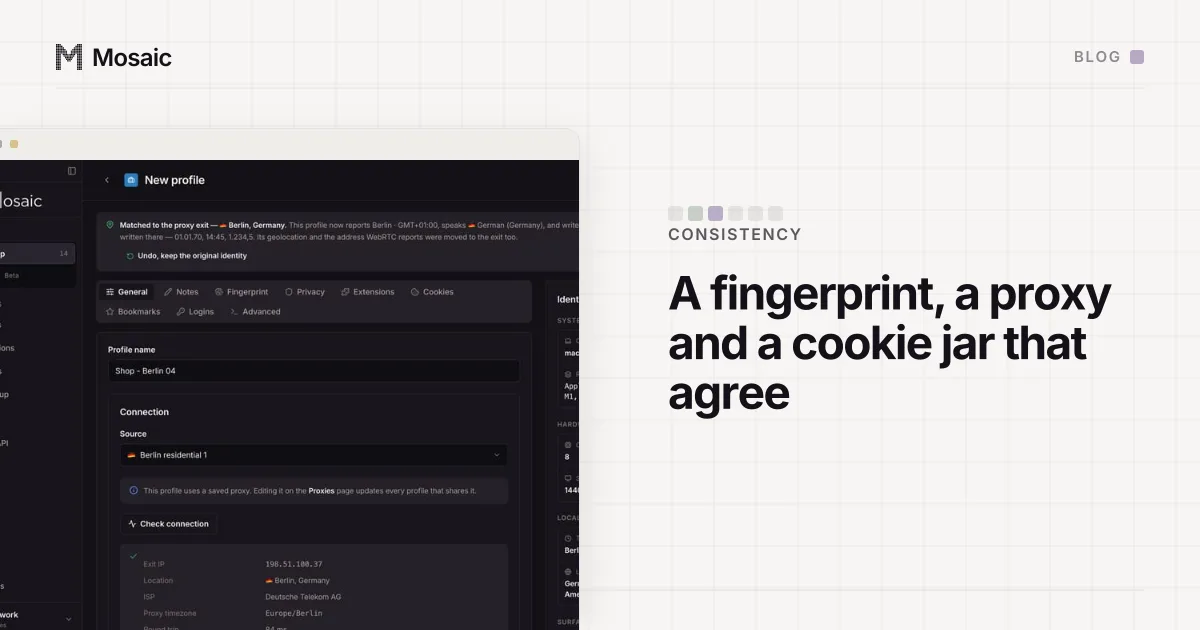
Why the parts of a profile have to agree
Fingerprint, proxy and cookies consistency: sites compare the three, and each can look fine alone while together they describe nobody.
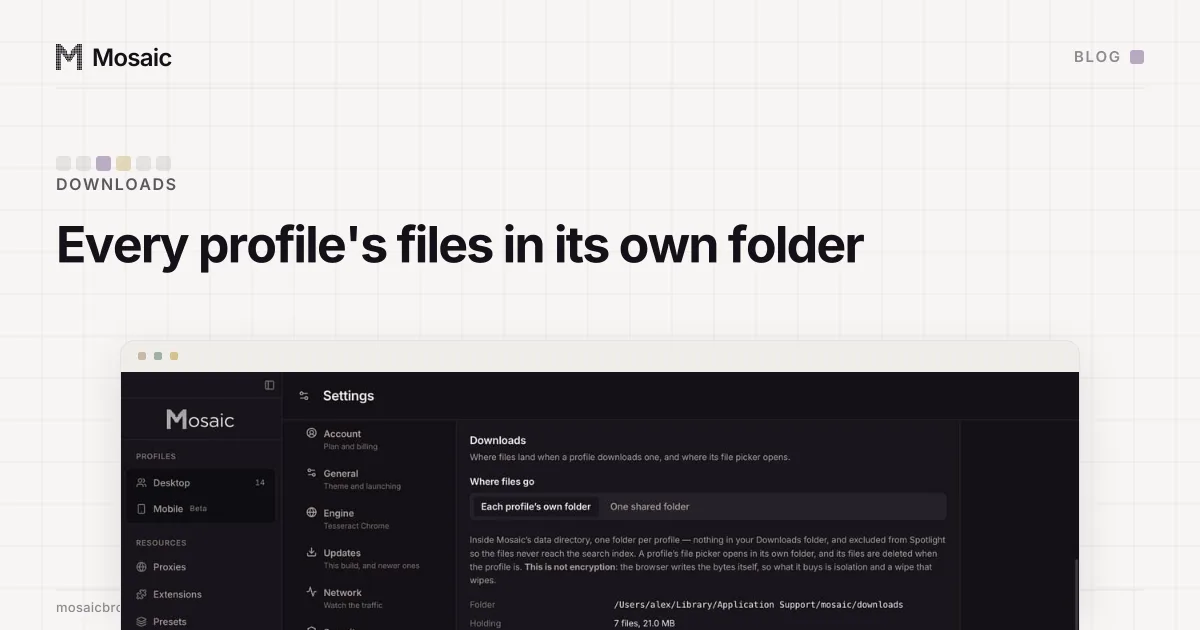
A downloaded file is evidence of its profile
With several browser profiles, one shared Downloads folder mixes every profile's files and outlives them. Mosaic gives each profile its own folder instead.
A detector that never answered because its tab was in the background
Background tab throttling stops requestAnimationFrame. Our test tab was in the background, two detectors never answered, and Page.bringToFront fixed both.
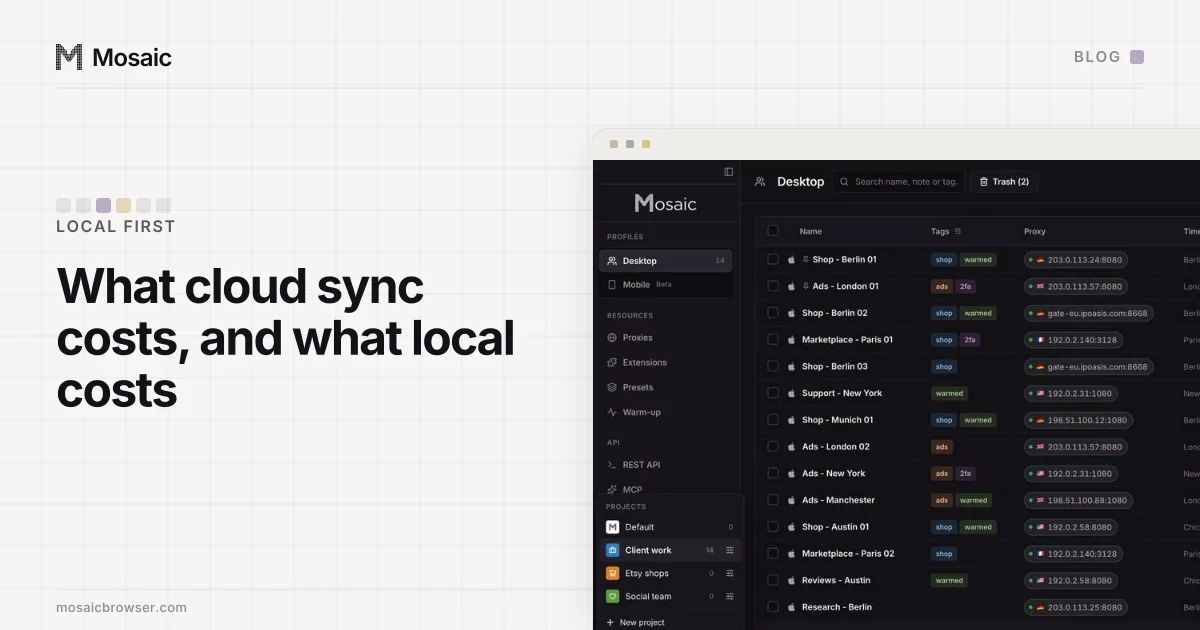
What cloud sync costs an anti-detect browser
Cloud sync puts every logged-in session you run in one vendor's database. Mosaic keeps profiles on your disk instead, and pays for it in three ways.
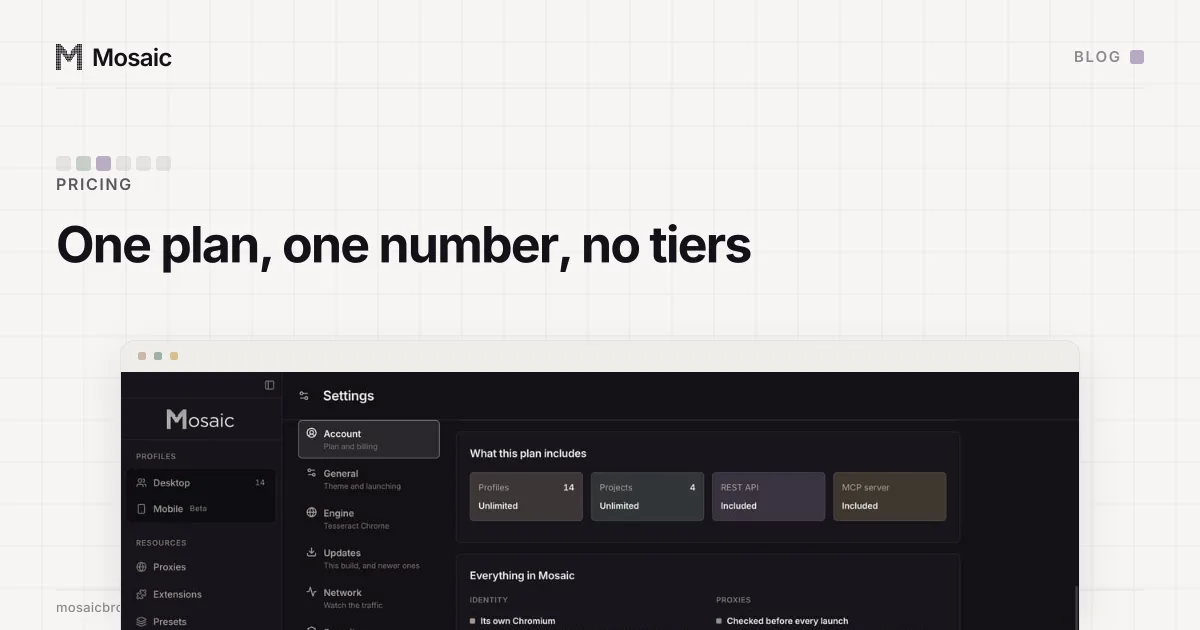
Why Mosaic Pro is one price
Anti-detect browser pricing per profile sells a count. Mosaic Pro is $49 a month for any count, because a profile on your own disk costs us nothing.
When the FingerprintJS demo can't name your browser
FingerprintJS read 'Chromium-Based Browser Not Available' for our engine. We blamed the version; the real variable was Google's branding.
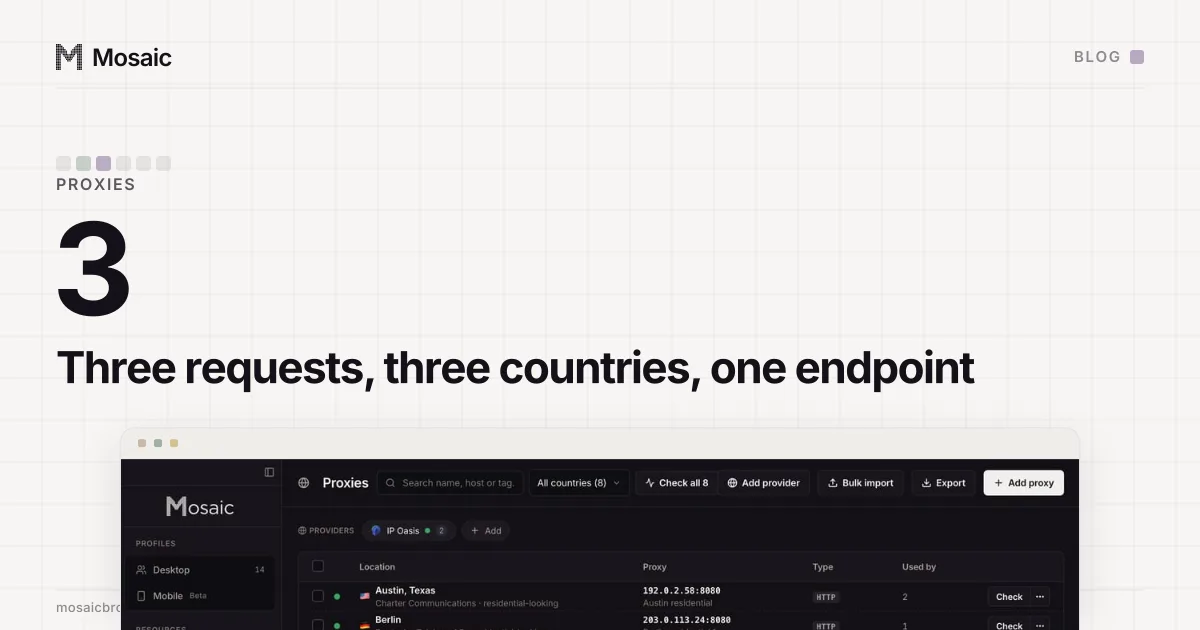
Peru, Brazil and Bahrain in three requests
A rotating proxy with no country pin can exit in a different country on every request. Fine for a stateless scrape, fatal to a profile that keeps one timezone.
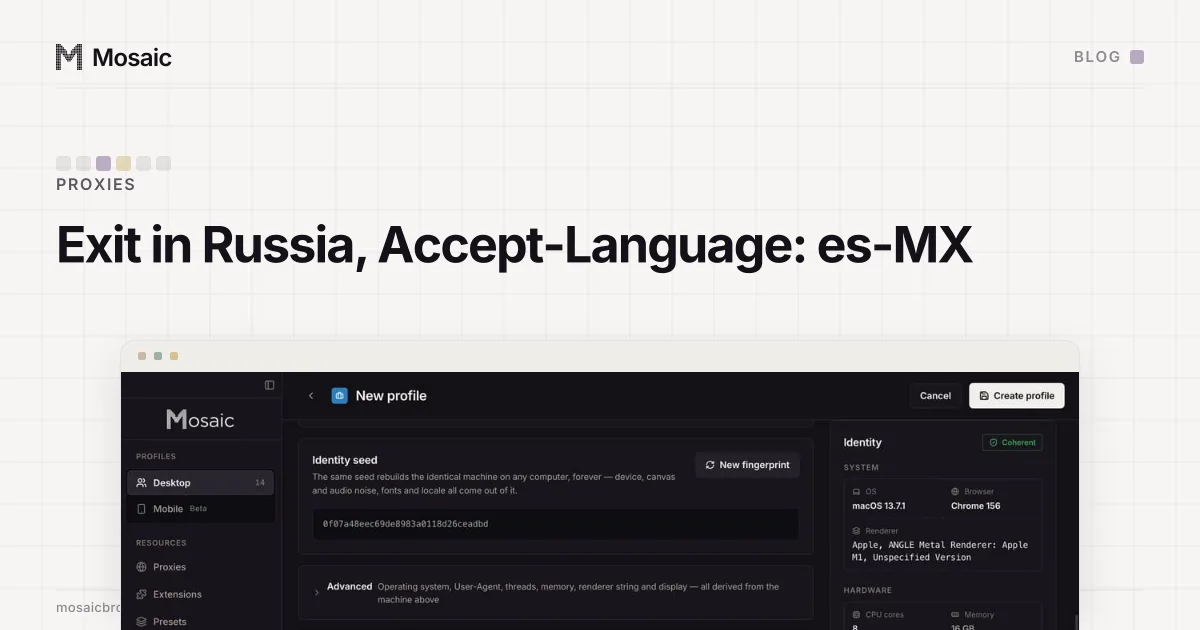
A Russian exit and a profile speaking Mexican Spanish
A profile matched to a Russian exit kept sending es-MX in Accept-Language. Leaving the language alone was right. Saying nothing about it was the bug.
IPHey's "(whale)" signal, and what it was really about
IPHey's inconsistent browser fingerprint (whale) looked like a version problem. We followed it through branding and JavaScript to a Widevine certificate.
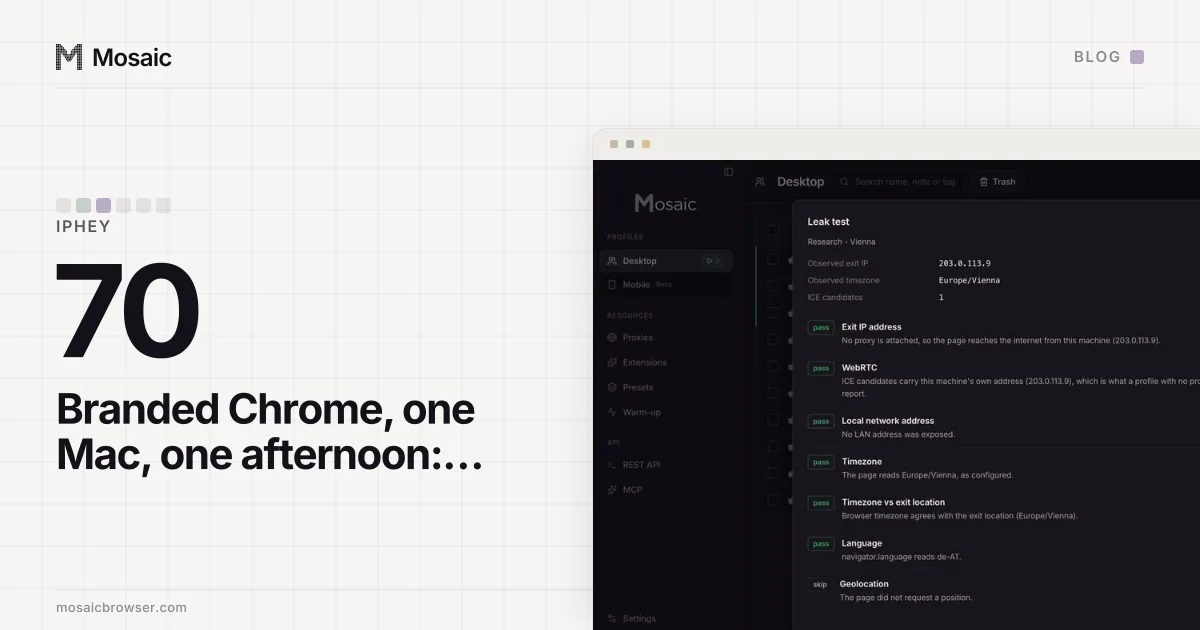
IPHey's score moved with the address, not the browser
IPHey score changes even on an untouched Chrome: 100, 100, 70 and 0 in one afternoon. The score follows the exit and the moment; the browser card does not.
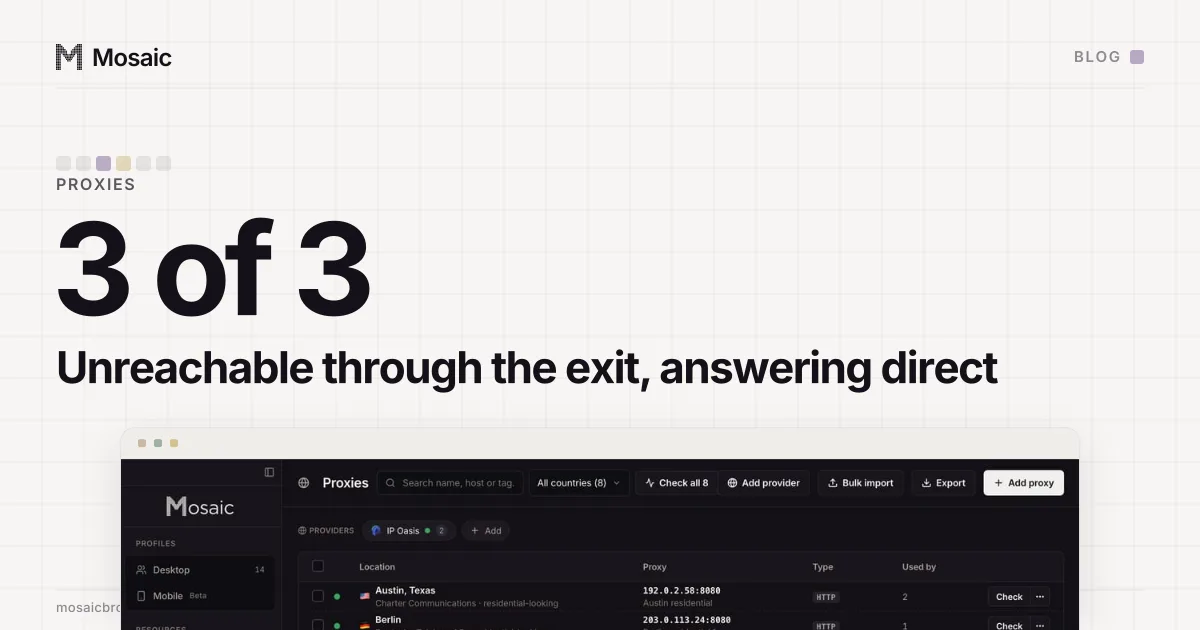
The residential IP several detectors already knew
A residential proxy can be detected as a proxy because it is one. On one Wichita exit, FingerprintJS and incolumitas never loaded in three rounds.
We broke the timezone on purpose and Pixelscan liked it better
We changed only the timezone on one profile behind a Slovak exit. Pixelscan flagged masking on the Vienna row, the correct one, and the controls disagreed.
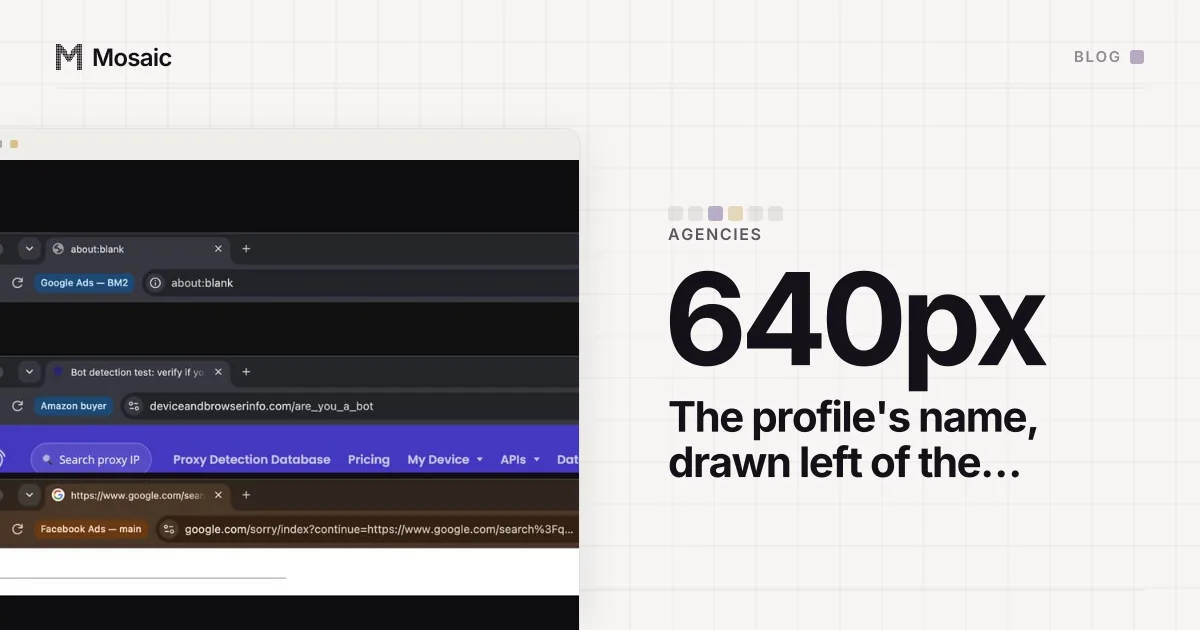
Posting to the wrong client's account, and how it happens
A post lands on the wrong client's account because two clients share one browser and every window looks the same. Delete it, tell both, then label windows.
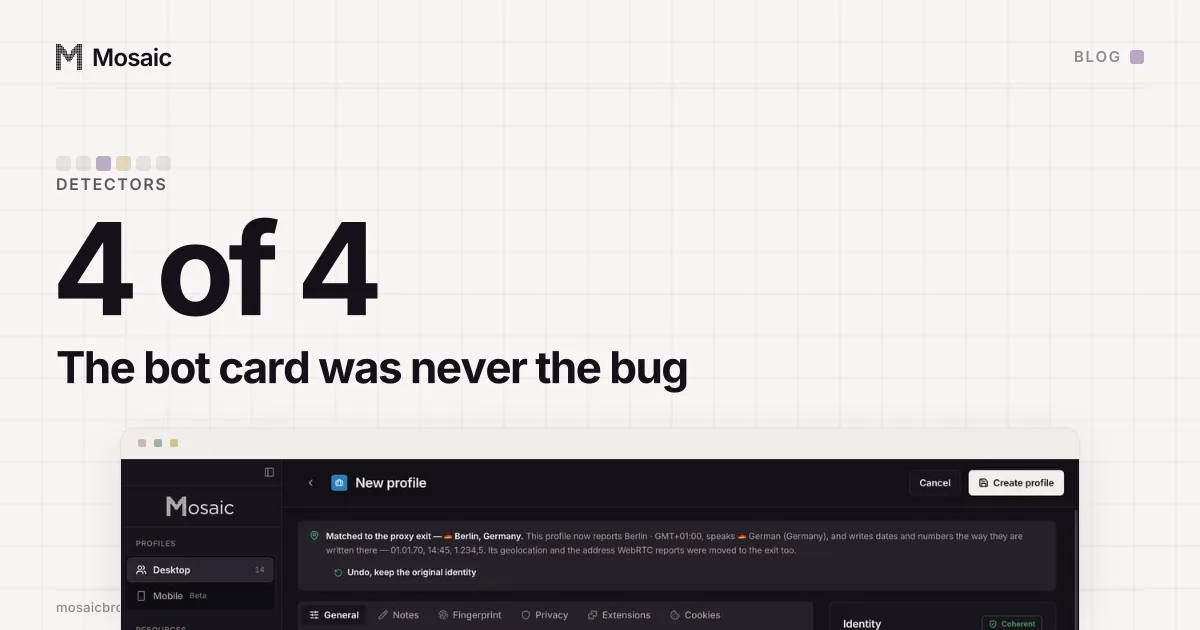
Pixelscan's automated behavior card, reproduced and not
Pixelscan's automated behavior detected card never came back on our own platform beside stock Chrome. The foreign platform claim failed four times in four.
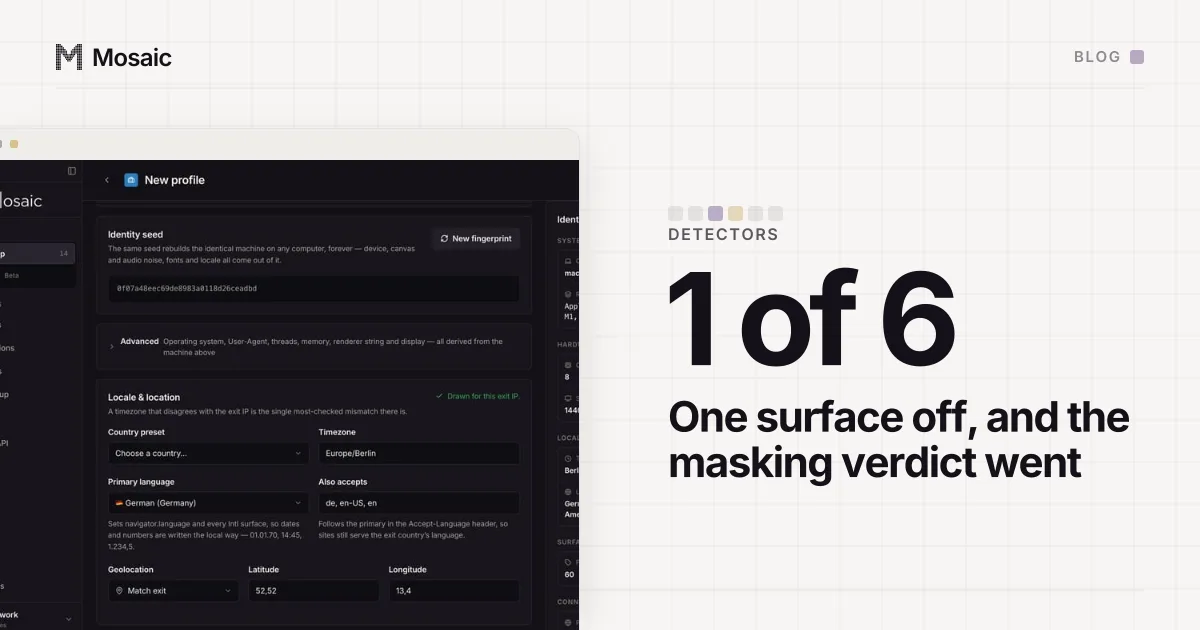
Pixelscan's masking verdict, bisected to one surface
We bisected Pixelscan's masking detected verdict on one profile. Canvas, WebGL, audio and client rects were fine. Hiding about 2% of font families caused it.
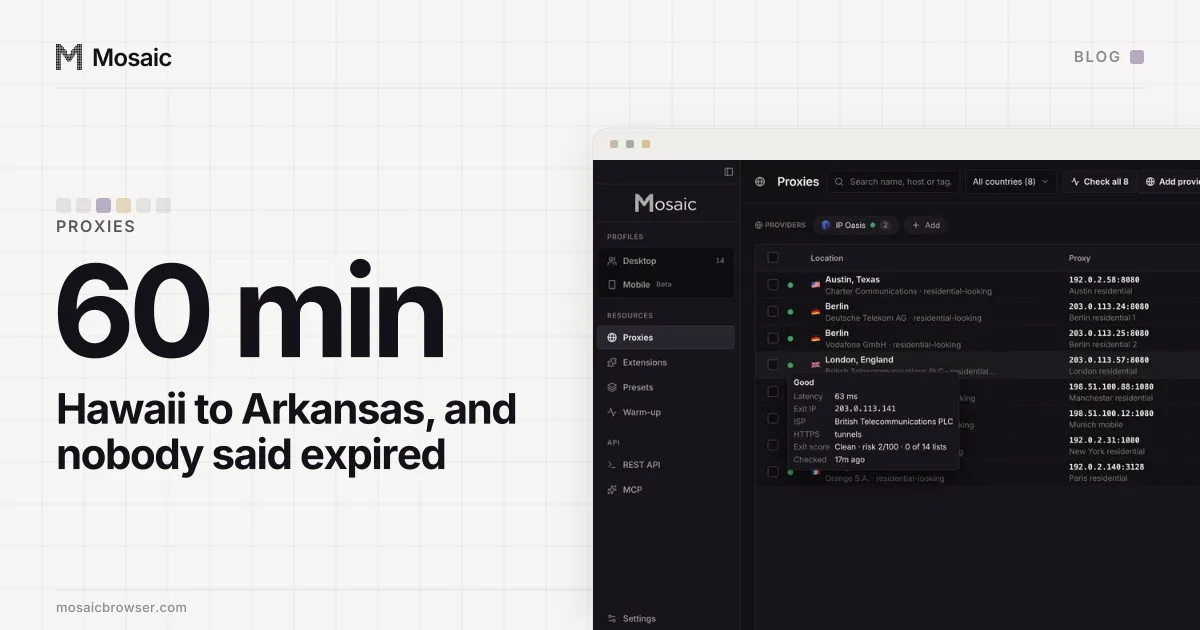
What an expiring sticky session looks like from inside a browser
A sticky session expired on our proxy: the browser showed tunnel errors, the check a healthy proxy in another state. Neither said expired.
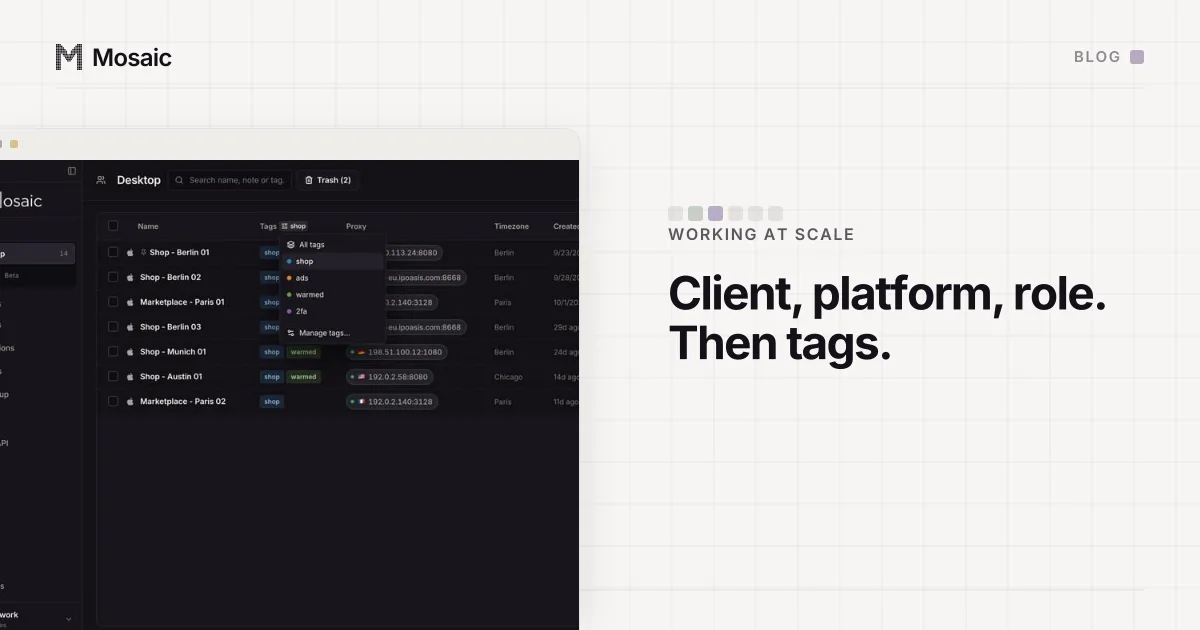
Naming 300 browser profiles so you can still find one
Name each profile client code, platform, role, in that order, so one search finds a client and one sort groups them. Status goes in a tag, not the name.
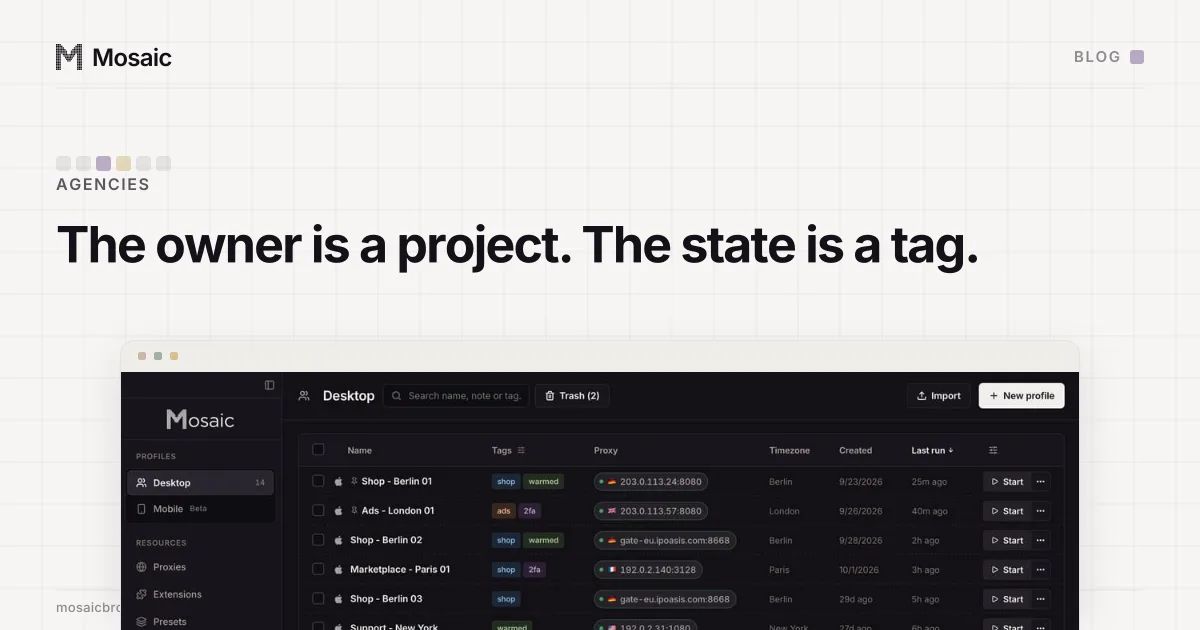
Projects say who owns it, tags say what state it's in
How to organize client accounts with tags: the client goes in a project, the state in a tag. Owners rarely change; states change weekly.
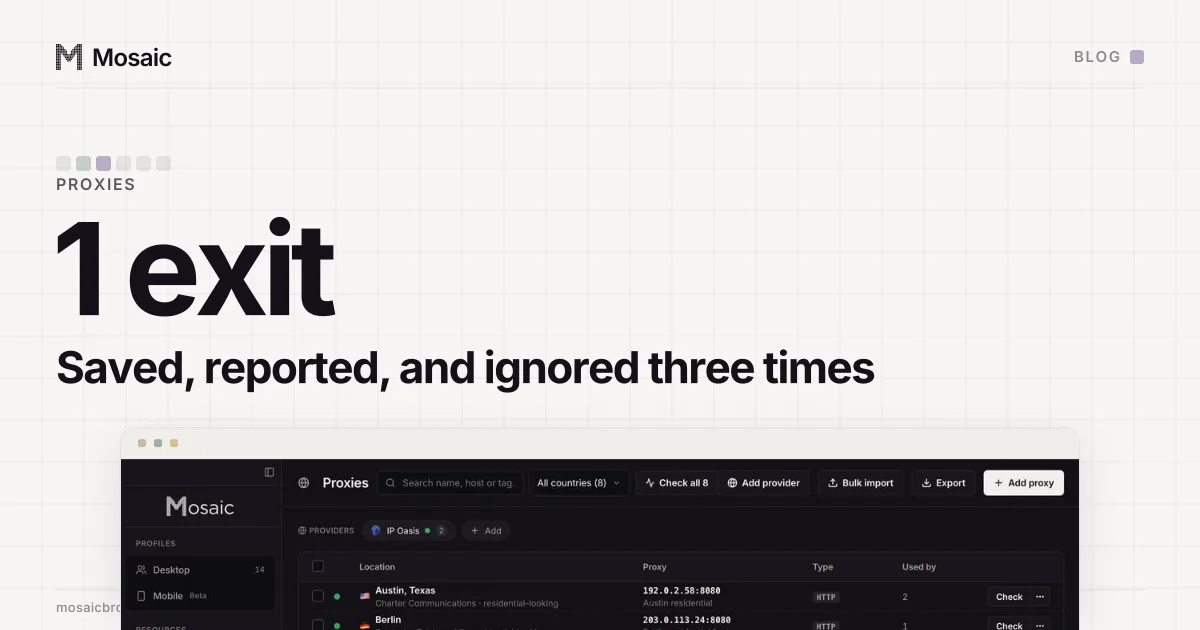
The setting was saved, and three launches ignored it
Our rotation setting was stored, reported back by the API, and ignored by three launches. A mapper had copied every field of the proxy except the new one.
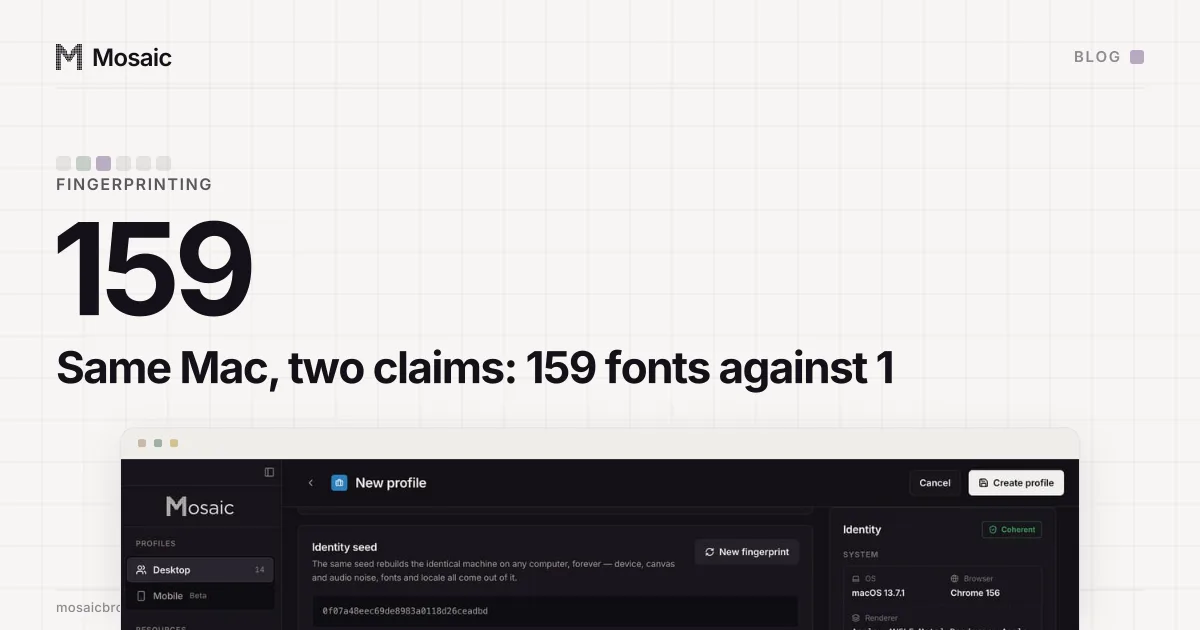
Why OS spoofing fails on fonts: a Mac makes Mac profiles
Why OS spoofing fails on fonts: they come from the computer, not the claim. A Linux profile made on our Mac showed 1 font where macOS showed 159.
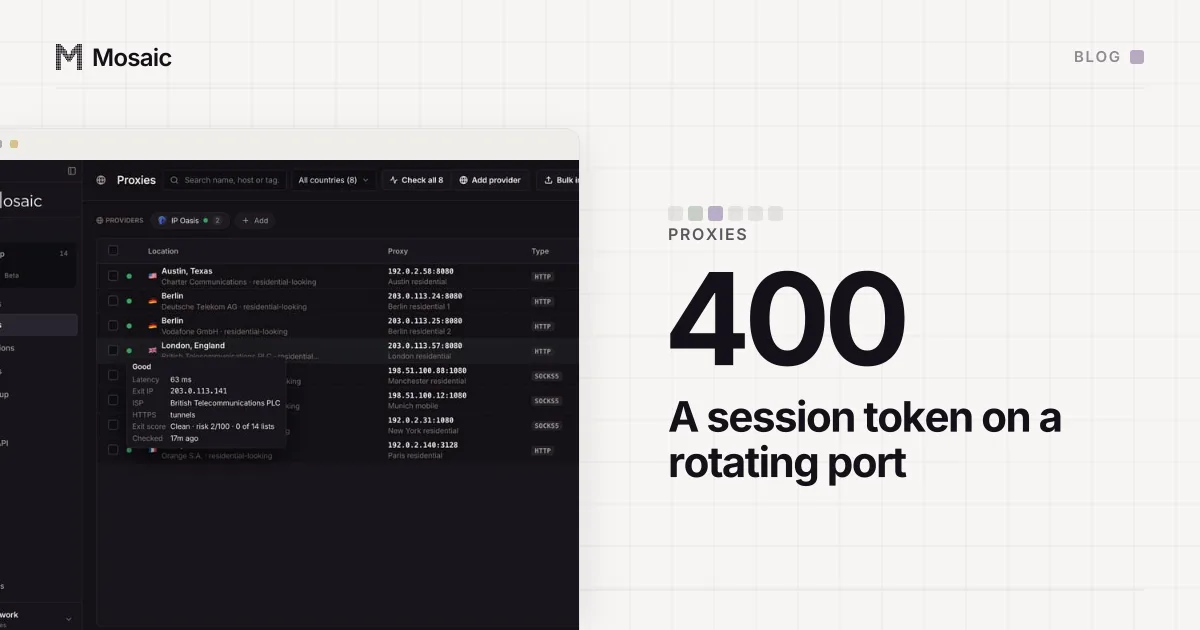
A session token on a rotating port is a 400, not a no-op
"Can not use -session- on rotating ports" means the port, not the username, decides stickiness. We had written the opposite, until we asked the gateway.
The canvas method nobody noised: what a worker test found
Our canvas noise reached toDataURL and missed toBlob, so a page calling toBlob got a PNG byte-identical to stock Chrome's. A worker test caught it.
Nothing here yet. The first one is coming soon.
Every account its own browser. One price for all of them.
Free holds 3 profiles and 10 profile creations, with no card. Pro is $49 a month for any number, or $490 a year with 2 months free. Try it for 14 days; cancel before day 14 and you pay nothing.